The undulating topography, glorious river and majestic trees combine to produce certainly one of Africa’s most captivating landscapes. Since visitor numbers are very few, it possesses a true wilderness atmosphere. Symbolized by the kudu, it really is considered to hold the highest power of elephants than every other african safari lodges luxury, with an amazing quantity of carnivores (lions, hyenas, wilddogs, leopards, cheetahs, …).
Lots who know Africa’s national parks consider Ruaha being among the best kept secrets, listing it as their favourite.
Size and situation: 20 226 km2.
Located in central Tanzania, Ruaha, with Usangu Game Reserve, is currently Tanzania’s, as well as East Africa’s largest park.
Landscapes: Ruaha’s scenery includes rolling hills, large open plains, groves of skeletal baobabs and, along its southern border, the wide Great Ruaha River.
Ruaha’s ecosystems represent a transition between your miombo woodlands as well as the more open savannah. This is evident within the park’s vegetation, which can be thick in certain areas yet wide open in other people.
The variation in altitude and topography has given rise to wide diversity of plants and wildlife, that is greatly enhanced through the permanent water with the Ruaha River. Enormous baobab trees certainly are a key feature with the park, where Ruaha’s huge elephant populations relish the succulent bark of Baobab trees.
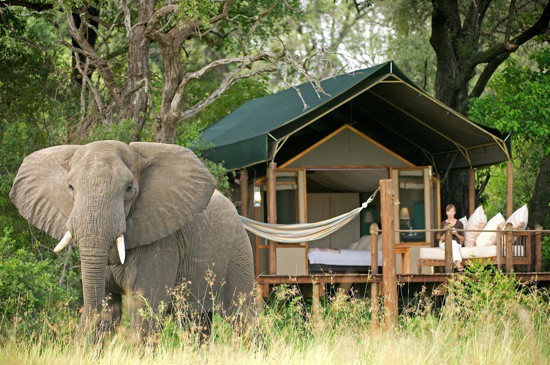
Wildlife: The park has the biggest concentration of elephants of any national park in East Africa (Selous Game Reserve has a larger population). The park is famous for its huge buffalo herds and it is number of antelope. Ruaha will be the only east African park with both Greater and Lesser Kudu, and sable and roan antelopes.
In addition, it has an unusual mixture of East and Southern African wildlife and birds.
It really is one of the most important areas in the world for giant carnivores, with 10% from the lions keeping Africa, along with large populations of wild dogs, cheetahs, leopards and spotted hyenas.
For birdwatchers, Ruaha’s birdlife is extraordinary, with 570 species recorded including turaco, racquet-tailed roller, red-billet fire finch and Dickinson’s kestrel. There are six varieties of both vultures and hornbills, and raptors abound.
Activities: A superb network of game-viewing roads follows the truly amazing Ruaha and its particular seasonal tributaries, where, through the dry season, impala, waterbuck as well as other antelopes risk their life to get a sip of life-sustaining water.
Fly camping can be organized through untouched bush. An earlier morning bird walk will let you discover the environment with the lodge’s surroundings.
Night game drives will also be possible, however only from some camps (please ask us).
The visit of your traditional and authentic Maasai Boma is an activity exclusively provided by Tandala Tented Camp.
Last but not least, since 2018, you can discover this unique park from the sky because of the balloon safaris operated from June to October.
Climate: Such as the all Southern Tanzania, Ruaha has two rainy seasons – a minimum of in theory – although weather in Africa is equally as unpredictable as somewhere else in the world.
Rapid rains fall in Ruaha National Park between October and late November; this can be a period by which things learn to turn green.
Most of the rains fall in March and April. The time has come if the sand rivers like the Mwagusi as well as the Mdonya are usually to flood.
A good time to go to the Park, especially for predators and large mammals, is probably inside the dry season. Although, the wet season is propitious to bird-watching, lush scenery and wild flowers while the male greater kudu is most visible in June, the breeding season.
 My Blog